
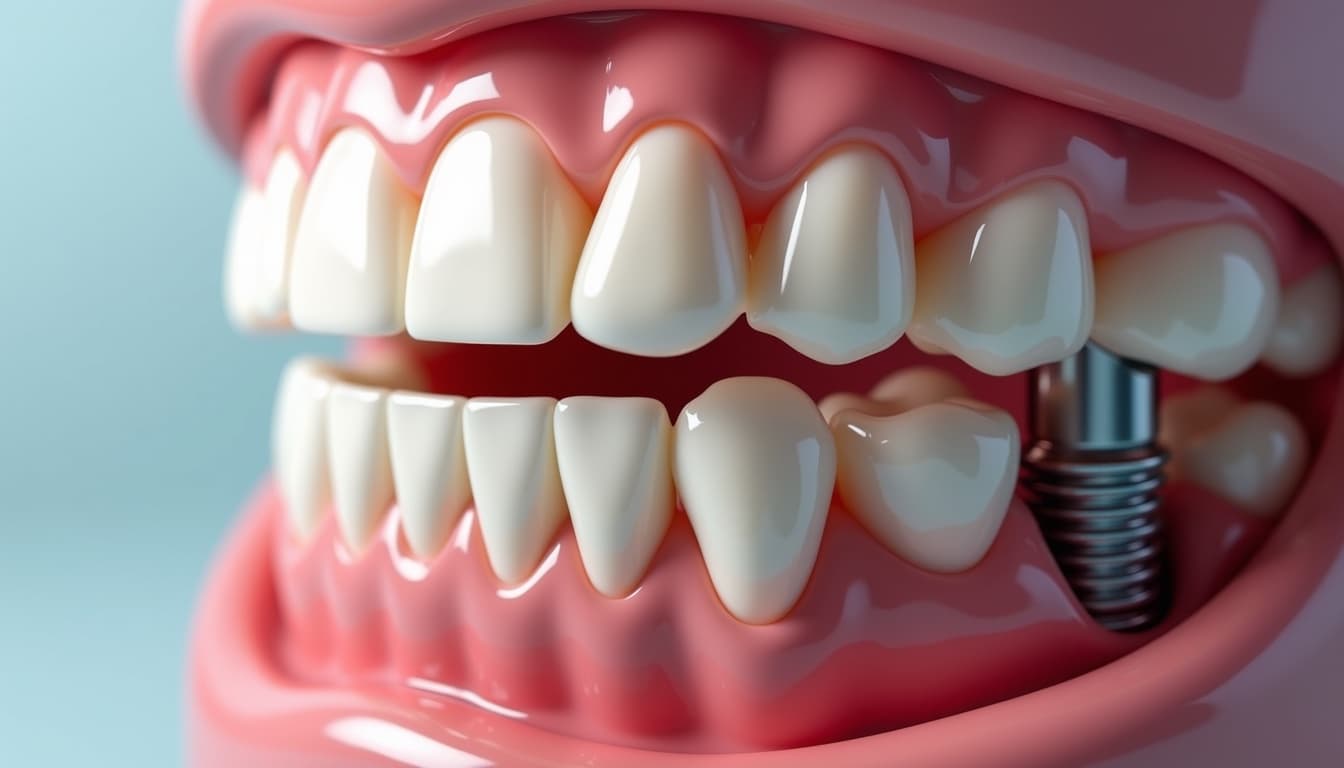
Losing multiple teeth or dealing with widespread dental damage can affect more than just your smile. It impacts your ability to eat, speak, and feel confident in social situations. Full mouth reconstruction offers a comprehensive solution to restore both function and appearance, helping patients regain their oral health and self-esteem. This guide explains the key treatments involved, including crowns, bridges, and implant-supported bridges, to help you understand your options and what to expect.
Full mouth reconstruction refers to rebuilding or replacing all the teeth in the upper and lower jaws. It is often necessary when patients have multiple missing, damaged, or decayed teeth that affect their bite, speech, and overall oral health. Unlike single-tooth treatments, this approach addresses the entire mouth, combining several dental procedures tailored to each patient’s needs.
Patients who benefit from full mouth reconstruction often experience:
- Difficulty chewing or biting
- Jaw pain or discomfort
- Speech problems
- Self-consciousness about their smile
- Increased risk of further dental issues
The goal is to restore the mouth’s function, improve aesthetics, and protect remaining natural teeth.
Crowns are tooth-shaped caps placed over damaged or weakened teeth to restore their shape, size, and strength. They are commonly used when teeth have large fillings, cracks, or root canal treatments.
- Protect fragile teeth from further damage or decay
- Restore chewing function by providing a strong biting surface
- Improve appearance by matching the color and shape of natural teeth
- Support adjacent teeth by maintaining proper alignment
Crowns can be made from various materials such as porcelain, ceramic, or metal alloys. Porcelain crowns are popular for their natural look and durability.
A patient with several cracked teeth due to grinding may receive crowns on those teeth to prevent fractures and restore their bite. This step often forms part of a larger reconstruction plan.
Bridges fill gaps left by missing teeth by anchoring artificial teeth to adjacent natural teeth. They are a fixed solution, meaning they are cemented in place and cannot be removed by the patient.
- Traditional bridges: Use crowns on the teeth next to the gap to support the replacement tooth or teeth.
- Cantilever bridges: Supported by a crown on only one adjacent tooth, used when there is only one side available.
- Maryland bridges: Use a metal or porcelain framework bonded to the back of adjacent teeth, often for front teeth.
- Restore chewing and speaking ability
- Prevent remaining teeth from shifting
- Improve smile aesthetics
- Avoid the need for removable dentures
Bridges require healthy adjacent teeth to support the structure. These teeth must be strong enough to bear the extra load, and sometimes they need crowns to provide a stable foundation.
When several teeth are missing in a row, implant-supported bridges offer a long-lasting and natural-feeling option. Instead of relying on natural teeth for support, dental implants are surgically placed into the jawbone to anchor the bridge.
- Titanium implants act as artificial tooth roots, integrating with the jawbone.
- The bridge is attached to these implants, replacing multiple teeth without affecting neighboring teeth.
- This method preserves bone density and prevents jawbone shrinkage that occurs after tooth loss.
- No need to alter healthy adjacent teeth
- Greater stability and chewing power
- Longer lifespan with proper care
- Improved oral health by maintaining bone structure
A patient missing four consecutive teeth in the lower jaw may receive two implants placed strategically to support a four-tooth bridge. This restores full function and appearance without compromising other teeth.
Full mouth reconstruction usually involves multiple steps and dental specialists working together. Here’s a typical process:
- Comprehensive evaluation: Includes X-rays, impressions, and bite analysis to assess oral health and plan treatment.
- Addressing underlying issues: Treating gum disease, infections, or decay before reconstruction.
- Restorative procedures: Placing crowns, bridges, implants, or dentures as needed.
- Adjustments and follow-up: Ensuring proper fit, bite alignment, and comfort.
Treatment time varies depending on the complexity, ranging from a few months to over a year for implant cases.
After full mouth reconstruction, maintaining oral hygiene is critical to protect your investment and health.
- Brush twice daily with fluoride toothpaste
- Floss carefully around crowns, bridges, and implants
- Visit your dentist regularly for cleanings and check-ups
- Avoid hard or sticky foods that can damage restorations
- Use a night guard if you grind your teeth
Following these steps helps ensure your new smile lasts for many years.
Beyond physical improvements, full mouth reconstruction can significantly boost confidence. Patients often report:
- Feeling more comfortable smiling and speaking
- Increased self-esteem in social and professional settings
- Relief from pain or discomfort that affected daily life
Restoring your smile can transform your quality of life.
Schedule a Visit
Have questions? We're here.
Call our office or book online. New patients always welcome, Hablamos Español.